

PainMap
PainMap runs parallel AI research across five platforms to find why tools fail and deliver a validated product brief with features, pricing, and copy.
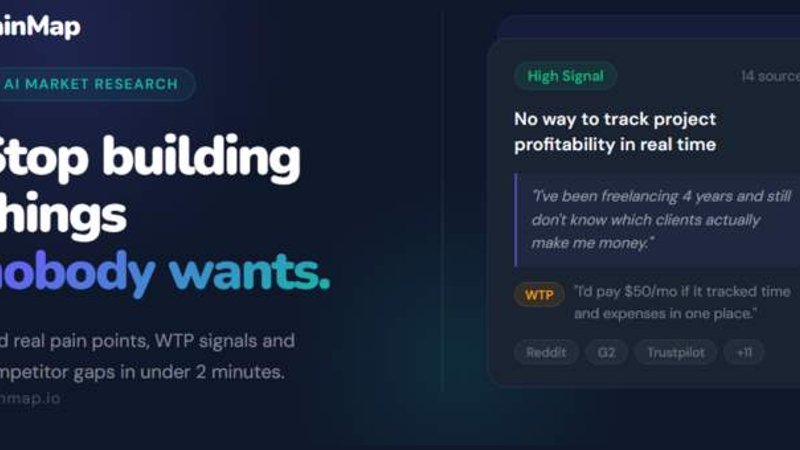
About PainMap
PainMap is an AI-powered market validation tool designed specifically for solo founders and indie hackers who are tired of building products that fail to gain traction. The core problem PainMap solves is the guesswork inherent in product development. Instead of relying on gut feelings or assumptions, PainMap runs parallel AI research across five major platforms simultaneously: Reddit, X (formerly Twitter), G2, Capterra, and Trustpilot. The moment a user hits the "Analyse" button, the system fires off research agents that mine these sources for real customer pain points, broken tools, manual processes, and money drains. Within approximately two minutes, the user receives a complete, validated product brief. This brief includes ten validated pain points backed by real evidence quotes, clear willingness-to-pay signals from actual market conversations, and a full MVP brief. The output is not a raw data dump but a structured, actionable package. Features are defined by competitor weaknesses, pricing is anchored to real market data, and landing page copy is ready to publish immediately. PainMap transforms the traditional, weeks-long process of market research into a streamlined, automated system that delivers a go-to-market strategy in under ten minutes. It is built for builders who want to ship products that the market is already actively seeking, reducing the risk of building something nobody wants.
Features of PainMap
Parallel Multi-Platform Research
PainMap distinguishes itself by conducting research across five major platforms in parallel, not sequentially. While most research tools or manual processes focus on a single source like Reddit or G2, PainMap fires AI agents simultaneously at Reddit, X, G2, Capterra, and Trustpilot. This approach captures a wider, deeper, and more representative market signal. It pulls from unstructured conversations on social platforms where users vent frustrations and from structured review sites where customers detail their experiences. By analyzing all five sources at once, PainMap provides a holistic view of the market landscape, identifying pain points that might only appear on one platform but are validated by patterns across others. This parallel processing is the engine that enables the tool to deliver a complete brief in under ten minutes.
Competitor Weakness Mining
This feature systematically analyzes every one-star and two-star competitor review found across the researched platforms. PainMap does not just count negative reviews; it categorizes recurring complaints, identifies patterns of failure, and maps unmet needs. The logic is straightforward: the weaknesses of existing competitors represent the most direct opportunities for a new entrant. By understanding exactly where the market is being let down, PainMap defines a product's feature set based on what customers are actively screaming for, not on assumptions. This transforms competitor failures into a clear, actionable product roadmap, giving founders a direct competitive advantage from day one.
WTP Pricing Intelligence
Pricing is a critical factor for product success, and PainMap extracts real willingness-to-pay (WTP) signals from the conversations and reviews it analyzes. The AI looks for how people talk about price, value, and switching costs in natural language. It identifies phrases that indicate what users consider a fair price, what they are currently paying for inferior solutions, and what would justify a premium. This data is then used to anchor the product's pricing tiers to real market signals, not guesswork. The result is a pricing strategy that is validated by actual customer sentiment, reducing the risk of pricing a product too high or too low.
Complete Product Brief Output
PainMap is designed as an output machine, not just a research tool. The final deliverable is a comprehensive product brief that consolidates all the research into an actionable format. This brief includes core features ranked by market demand, pricing recommendations backed by WTP data, and a landing page copy that is written and ready to publish. The brief is structured to be immediately useful for a solo founder or indie hacker. It eliminates the need to synthesize raw data, write copy from scratch, or make subjective decisions about feature priority. The output is a validated go-to-market package that can be acted on immediately to accelerate the path to revenue.
Use Cases of PainMap
Validating a New Product Idea Before Building
A solo founder has a concept for a new SaaS tool but is unsure if the market truly needs it. Instead of spending months building and launching into silence, they input their concept into PainMap. The tool runs parallel research across all five platforms, identifying real conversations about the problem, competitor weaknesses, and willingness-to-pay signals. Within minutes, the founder has a validated brief showing that the market is actively seeking a solution and is willing to pay for it. This evidence-based validation saves months of wasted development time and confirms the idea has traction before a single line of code is written.
Defining a Feature Set Based on Competitor Gaps
An indie hacker is entering a competitive market and wants to differentiate their product. They use PainMap to analyze the one and two-star reviews of their top three competitors. The tool identifies recurring complaints about poor customer support, a missing integration, or a clunky user interface. PainMap categorizes these weaknesses into product opportunities. The hacker then defines their MVP feature set to directly address these gaps, ensuring their product immediately solves the problems that competitors are ignoring. This targeted approach creates a clear competitive advantage and a more compelling value proposition.
Anchoring Pricing to Real Market Data
A founder is struggling to set the pricing tiers for their new B2B software. They are torn between a low-cost penetration strategy and a premium positioning. They use PainMap to analyze conversations where users discuss pricing, value, and switching costs related to existing solutions. The tool extracts WTP signals, revealing that the target market is accustomed to paying a specific monthly fee for similar functionality and is frustrated by hidden costs. The founder uses this data to set their pricing tiers confidently, knowing they are anchored to what the market has already validated it will pay, reducing the risk of pricing errors.
Generating Ready-to-Publish Marketing Copy
A solo founder has validated their product idea and defined its features, but they lack the time or skill to write effective landing page copy. PainMap's output includes a complete landing page copy that is written based on the research findings. The copy uses the actual language and pain points identified from real user conversations, making it highly resonant with the target audience. The founder can take this copy and publish it immediately on their landing page, saving days of writing and editing time. The copy is not generic; it is specifically crafted to speak directly to the validated pain points of the market.
Frequently Asked Questions
How long does it take to get a complete product brief from PainMap?
The entire process, from entering your product concept to receiving the validated product brief, takes under ten minutes. The parallel AI research across Reddit, X, G2, Capterra, and Trustpilot is the key to this speed. While you wait, the system analyzes thousands of conversations and reviews simultaneously. The final output, including validated pain points, competitor weaknesses, WTP pricing data, and landing page copy, is compiled and delivered in approximately two minutes after the research fires. This is a dramatic improvement over the weeks it would take to perform this research manually.
What platforms does PainMap research?
PainMap researches five major platforms simultaneously: Reddit, X (formerly Twitter), G2, Capterra, and Trustpilot. This combination is chosen to capture both unstructured, conversational feedback from social platforms and structured, review-based feedback from software and business review sites. By covering these five sources in parallel, PainMap provides a comprehensive view of the market landscape, ensuring that no significant source of customer sentiment is missed. This multi-platform approach is a core differentiator from tools that only scrape a single source.
Is PainMap suitable for validating ideas in any industry?
Yes, PainMap is designed to be industry-agnostic. The tool works by analyzing conversations and reviews that are publicly available on the five platforms it researches. As long as there is a market conversation happening about a problem, a competitor, or a product category on these platforms, PainMap can extract relevant insights. It is particularly powerful for digital products, SaaS tools, and software solutions where user feedback is abundant online. For highly niche physical products or B2B services with little online presence, the results may be less robust, but the tool still provides valuable directional data.
What is included in the final product brief?
The final product brief is a comprehensive, actionable package. It includes ten validated pain points with real evidence quotes pulled from the research. It contains a list of core features ranked by market demand, which are derived from competitor weaknesses and user complaints. The brief also includes pricing recommendations backed by real willingness-to-pay (WTP) signals extracted from conversations about value and switching costs. Finally, it provides a complete landing page copy that is written and ready to publish. The brief is designed to be a go-to-market package, not just a research dump, allowing founders to move directly from validation to action.
Similar to PainMap


Wisegrid
Wisegrid helps project-driven teams manage projects, workflows, resources, and reporting in a familiar spreadsheet-style workspace.


Plate Photo AI
Plate Photo AI transforms ordinary phone food photos into professional, menu-ready images in seconds using AI editing and style presets.

Breezit AI
Breezit AI is an intelligent sales assistant that captures every venue inquiry across all channels and converts 50 percent more leads into bookings.
