

Kelda
Kelda cross-references your labs, medications, symptoms, and wearable data to uncover hidden health patterns and insights.
About Kelda
Kelda is a comprehensive health and wellness platform designed to help individuals understand the complex connections between their medications, nutrients, biomarkers, symptoms, and overall wellbeing. The platform addresses a critical gap in modern healthcare: while standard lab results often come back "within range," many people continue to experience real symptoms that remain unexplained. Kelda bridges this divide by cross-referencing medications, lab results, symptoms, and wearable data in one centralized location. The platform is built for anyone who has seen multiple doctors, undergone extensive testing, and still feels stuck without answers. Kelda is particularly valuable for individuals managing chronic conditions such as PCOS, hypothyroidism, iron deficiency, B12 deficiency, endometriosis, perimenopause, fibromyalgia, insulin resistance, IBS, Hashimoto's, chronic fatigue, anxiety and depression, migraine, and autoimmune conditions. The platform publishes clear, research-informed content on medication depletion patterns, lab markers, nutrient interactions, supplement timing, and common health questions. By combining educational resources with structured health content and practical insights, Kelda helps users move from confusion to clarity. The platform enables users to make better-informed decisions and have more productive conversations with their healthcare providers by providing evidence-aware health information that simplifies complex medical data into accessible, actionable insights.
Features of Kelda
Medication to Nutrient Depletion Analysis
Kelda analyzes your current medication list and cross-references it against known nutrient depletion patterns. For example, the platform can identify that omeprazole may be depleting magnesium, which is commonly linked to fatigue, cramps, and poor sleep. This feature helps users understand how their prescriptions might be affecting their nutrient status and overall wellbeing in ways that standard medical consultations often overlook.
Lab Result Interpretation with Optimal Ranges
Unlike standard lab reports that only flag results as "normal" or "abnormal," Kelda provides context by comparing your results against optimal ranges for specific health outcomes. For instance, if your ferritin level is 25, your doctor may say it is normal, but Kelda will indicate that optimal levels for preventing hair loss and maintaining energy start at 70. This feature empowers users to understand what their numbers truly mean for their health.
Symptom and Wearable Data Pattern Detection
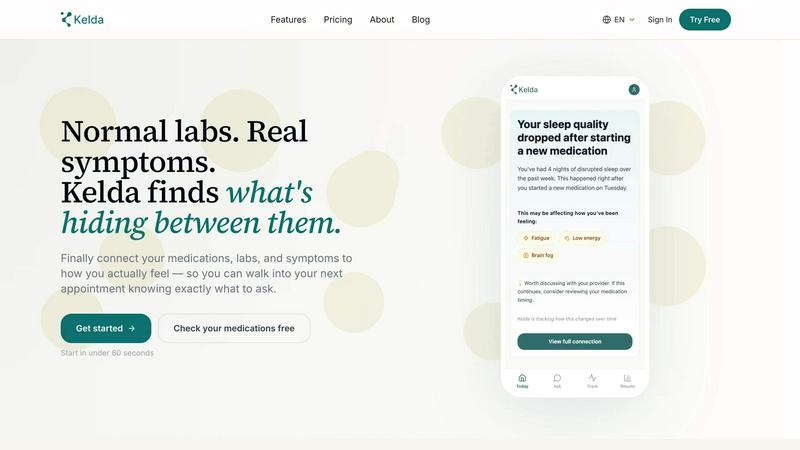
Kelda integrates data from your symptoms and wearable devices to detect patterns that may indicate underlying health issues. The platform can identify correlations such as sleep quality dropping after starting a new medication, with corresponding shifts in energy and mood. This holistic approach helps users see how different aspects of their health are interconnected over time.
Comprehensive Condition Cross-Referencing
The platform cross-references your personal health data against a wide range of conditions, from commonly known issues like PCOS and thyroid disorders to more subtle imbalances such as drug-induced nutrient depletion, thyroid conversion failure, CYP enzyme inhibition, HPA axis dysregulation, methylation deficiency, copper-zinc imbalance, oxalate accumulation, and serotonin precursor depletion. This feature helps uncover connections that are easy to miss in fragmented care systems.
Use Cases of Kelda
Identifying Hidden Causes of Unexplained Symptoms
A user who has experienced persistent fatigue, brain fog, and muscle cramps despite normal lab results can use Kelda to cross-reference their medications and symptoms. The platform might reveal that their proton pump inhibitor is depleting magnesium and vitamin B12, explaining their symptoms. This insight allows them to discuss targeted supplementation or alternative medications with their healthcare provider.
Optimizing Lab Results for Better Health Outcomes
An individual with iron deficiency anemia who has been told their ferritin is "within range" can use Kelda to understand that their level is actually suboptimal for energy production and hair health. The platform provides context on what optimal ranges look like for specific health goals, enabling the user to advocate for more aggressive treatment or dietary adjustments during their next medical appointment.
Tracking Medication Side Effects Over Time
A user starting a new medication for anxiety or depression can log their symptoms and sync their wearable data with Kelda. The platform monitors changes in sleep patterns, heart rate variability, and mood over time. If a pattern emerges showing significant sleep disruption coinciding with the medication start, Kelda flags this connection, helping the user and their doctor make informed decisions about dosage adjustments or alternative treatments.
Managing Complex Chronic Conditions
A patient with Hashimoto's thyroiditis who also has PCOS and insulin resistance can use Kelda to see how their various medications, supplements, and lab results interact. The platform might identify that their thyroid medication absorption is being affected by calcium supplements or that their metformin is depleting vitamin B12. This comprehensive view helps the user coordinate care between multiple specialists and optimize their treatment plan.
Frequently Asked Questions
How does Kelda differ from my regular doctor?
Kelda is designed to complement, not replace, your healthcare provider. While doctors focus on diagnosing and treating specific conditions within their specialty, Kelda takes a holistic view of your health data. The platform identifies connections between medications, labs, symptoms, and lifestyle factors that may be missed in fragmented healthcare systems. Kelda provides evidence-informed insights that you can bring to your appointments for more productive discussions with your provider.
What types of health data can I upload to Kelda?
Kelda accepts a wide range of health data including medication lists, lab results (blood work, hormone panels, nutrient levels), symptom logs, and wearable device data (sleep, heart rate, activity levels). The platform is designed to integrate this information and find patterns across all data types. You can start with just your medication list and lab results, then add more data over time as you use the platform.
Is my health data secure and private on Kelda?
Yes, Kelda takes data privacy and security seriously. The platform uses industry-standard encryption to protect your personal health information. Your data is stored securely and is never shared with third parties without your explicit consent. Kelda is designed to be your personal health companion, and maintaining your trust through robust data protection practices is a core priority.
How long does it take to see results from using Kelda?
You can get started in under 60 seconds by entering your medication list. The platform will immediately begin cross-referencing your medications against known nutrient depletion patterns and common side effects. As you add more data, such as lab results and symptom logs, the platform will identify more complex patterns and connections. Many users discover meaningful insights within their first session, though the full benefit grows as you continue to use the platform over time.
Similar to Kelda

Gamespad Taster
A simple online gamepad tester that helps you check controller buttons, sticks, triggers, D-pad, and other inputs instantly.

tallycounterweb.com
Tally Counter is a simple online counting tool for tracking attendance, workouts, inventory, sports scores, visitors, and everyday activities.


Wisegrid
Wisegrid helps project-driven teams manage projects, workflows, resources, and reporting in a familiar spreadsheet-style workspace.


Plate Photo AI
Plate Photo AI transforms ordinary phone food photos into professional, menu-ready images in seconds using AI editing and style presets.