

TDEE Calculator
Uncover your precise daily calorie needs for weight control, meal planning, and performance using the evidence-based Mifflin-St Jeor equation.
About TDEE Calculator
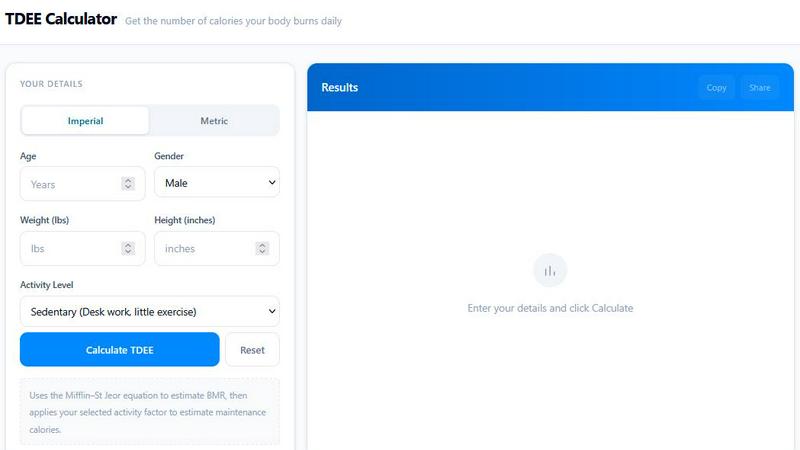
The TDEE Calculator is a specialized digital tool designed to help individuals accurately estimate their Total Daily Energy Expenditure, which represents the total number of calories their body burns in a single day. This free, web-based calculator serves as an essential resource for anyone looking to manage their weight, optimize their nutrition, or improve their overall health through informed calorie planning. The tool is built around the scientifically validated Mifflin-St Jeor equation, which research published in the American Journal of Clinical Nutrition has identified as one of the most reliable methods for estimating resting metabolic rate in healthy adults. By inputting basic personal details including age, sex, height, weight, and activity level, users receive an instant calculation of their maintenance calories along with practical recommendations for fat loss, muscle gain, or weight maintenance. The primary audience for this product includes fitness enthusiasts, individuals pursuing weight management goals, athletes seeking performance optimization, and anyone interested in understanding their body's energy requirements. The calculator distinguishes itself through its combination of speed, accuracy, and practical utility, offering not just a single number but a comprehensive starting point for dietary planning. It provides calorie deficit and surplus recommendations, macro guidance, and activity-based adjustments that help users create personalized nutrition plans aligned with their specific lifestyle and objectives. The tool is designed for clarity and immediate use, requiring no complex setup or prior knowledge of nutrition science, making it accessible to beginners while remaining valuable for experienced fitness practitioners. By treating the calculated TDEE as a baseline estimate that can be refined through real-world observation, users gain a practical framework for making informed decisions about their calorie intake and achieving sustainable results.
Features of TDEE Calculator
Scientifically Validated Calculation Method
The TDEE Calculator employs the Mifflin-St Jeor equation, a formula extensively validated by clinical research for its accuracy in estimating Basal Metabolic Rate in healthy adults. For men, the calculation uses the formula BMR = (10 x weight in kg) + (6.25 x height in cm) - (5 x age) + 5, while for women it uses BMR = (10 x weight in kg) + (6.25 x height in cm) - (5 x age) - 161. The final TDEE is derived by multiplying the BMR by an appropriate activity factor, ensuring users receive estimates grounded in physiological science rather than arbitrary guesswork.
Comprehensive Activity Level Options
Users can select from five precisely defined activity levels that range from sedentary to athlete, each with a corresponding activity factor multiplier. Sedentary individuals with desk jobs and little exercise use a factor of 1.2, while those with light exercise 1-3 days per week use 1.375. Moderate exercise 3-5 days per week corresponds to 1.55, heavy exercise 6-7 days per week uses 1.725, and elite athletes with multiple daily training sessions use 1.9. This granular approach ensures the calculation accurately reflects each user's unique lifestyle and energy demands.
Dual Unit Input System
The calculator offers both Imperial and Metric measurement options, accommodating users from different regions and personal preferences. Individuals can enter their weight in pounds or kilograms and their height in inches or centimeters, with the tool automatically handling all necessary conversions behind the scenes. This flexibility eliminates the need for manual unit conversions and makes the tool accessible to a global audience without requiring users to learn unfamiliar measurement systems.
Instant Results with Actionable Insights
Upon entering all required details and clicking Calculate, users receive immediate results showing their maintenance calories along with practical recommendations for calorie deficits for fat loss and surpluses for muscle gain. The tool also provides macro guidance and activity-based adjustments, enabling users to create a comprehensive dietary plan. Results can be easily copied or shared, facilitating tracking and consultation with healthcare providers or fitness professionals.
Use Cases of TDEE Calculator
Weight Loss Planning and Management
Individuals seeking to lose weight can use the TDEE Calculator to establish a precise calorie deficit that promotes fat loss while preserving muscle mass. By knowing their maintenance calories, users can create a daily deficit of 250-500 calories, which typically supports steady, sustainable weight loss of about 0.5 to 1 pound per week. The tool eliminates guesswork by providing a scientifically grounded starting point, allowing users to track their progress over 2-3 weeks and make small adjustments of 100-200 calories based on real-world results.
Muscle Building and Athletic Performance
For those focused on building muscle and improving athletic performance, the calculator helps establish an appropriate calorie surplus of approximately 200-350 calories per day above maintenance. This controlled surplus supports muscle growth and recovery without leading to excessive fat gain. Athletes and bodybuilders can use the tool to fine-tune their nutrition around training cycles, ensuring they consume enough energy to fuel intense workouts while optimizing body composition changes over time.
Weight Maintenance and Lifestyle Balance
Individuals who have reached their target weight or simply want to maintain their current physique can use the TDEE Calculator to determine their precise maintenance calorie needs. This information helps users avoid unintentional weight gain or loss by aligning their daily food intake with their body's actual energy requirements. The tool is particularly valuable for those transitioning from weight loss or muscle gain phases, providing a clear target to stabilize their weight and develop sustainable eating habits.
Nutritional Education and Personal Awareness
The calculator serves as an educational tool for anyone interested in understanding how their body uses energy throughout the day. By exploring how different activity levels affect their TDEE, users gain insight into the relationship between exercise, metabolism, and calorie requirements. This knowledge empowers individuals to make informed decisions about their diet and activity choices, fostering a deeper understanding of nutrition science and personal physiology that supports long-term health management.
Frequently Asked Questions
What does TDEE mean and how is it calculated?
TDEE stands for Total Daily Energy Expenditure, which represents the total number of calories your body burns over an entire 24-hour period. This includes your Basal Metabolic Rate, which is the energy needed to keep you alive at rest, the energy required to digest and process food, and the calories burned through all movement and exercise. The calculator estimates your BMR using the Mifflin-St Jeor equation based on your age, sex, height, and weight, then multiplies that number by an activity factor that reflects your typical daily movement and exercise levels.
How is TDEE different from BMR?
Basal Metabolic Rate represents the minimum number of calories your body needs to maintain basic life functions while at complete rest, such as breathing, circulation, and cell production. TDEE is a more comprehensive measurement that includes BMR plus all additional calories burned through daily activities, exercise, and the thermic effect of food. While BMR typically accounts for about 60-75 percent of total daily calorie expenditure, TDEE provides the complete picture needed for effective weight management and nutrition planning.
How accurate is this calculator and should I recalculate after losing weight?
The calculator provides a reliable starting estimate based on the scientifically validated Mifflin-St Jeor equation, but individual results may vary due to factors like genetics, muscle mass, and metabolic adaptations. For best results, use the calculated TDEE consistently for 2-3 weeks while monitoring your body weight. If your weight stays stable, the estimate is likely accurate for you. You should definitely recalculate after significant weight changes because your BMR decreases as you lose weight, meaning your calorie needs will change over time.
How many calories should I eat to lose weight or build muscle using this calculator?
For fat loss, most people achieve good results by creating a daily calorie deficit of approximately 250-500 calories below their calculated TDEE, which typically supports steady weight loss without compromising energy levels or metabolism. For building muscle, a daily surplus of about 200-350 calories above maintenance often supports progress without excessive fat gain. These are starting recommendations that can be adjusted based on your individual response, so monitor your progress over several weeks and adjust by 100-200 calories as needed.
Similar to TDEE Calculator


Caesura
Caesura is a macOS menu-bar app that reminds you to drink water, stretch, rest your eyes, and breathe on scientifically backed intervals.

Holly AI
Holly AI is an AI operator that automates patient scheduling and front desk tasks to help healthcare clinics grow without burnout.

Droidal Insurance Verification AI Agent
Droidal Insurance Verification AI Agent automates real-time eligibility checks to eliminate denials and accelerate payments.